Most of our Morningside work is pruning and removing large oaks that hang over slate and tile roofs, plus trees on the steep lots that drop toward the Morningside Nature Preserve and the South Fork of Peachtree Creek. The neighborhood sits inside Atlanta city limits, so removing a tree 6 inches or more at 4.5 feet, or a pine at 12, needs a city permit. Call the 24/7 line for a visit.
Big oaks over slate roofs and brick Tudors
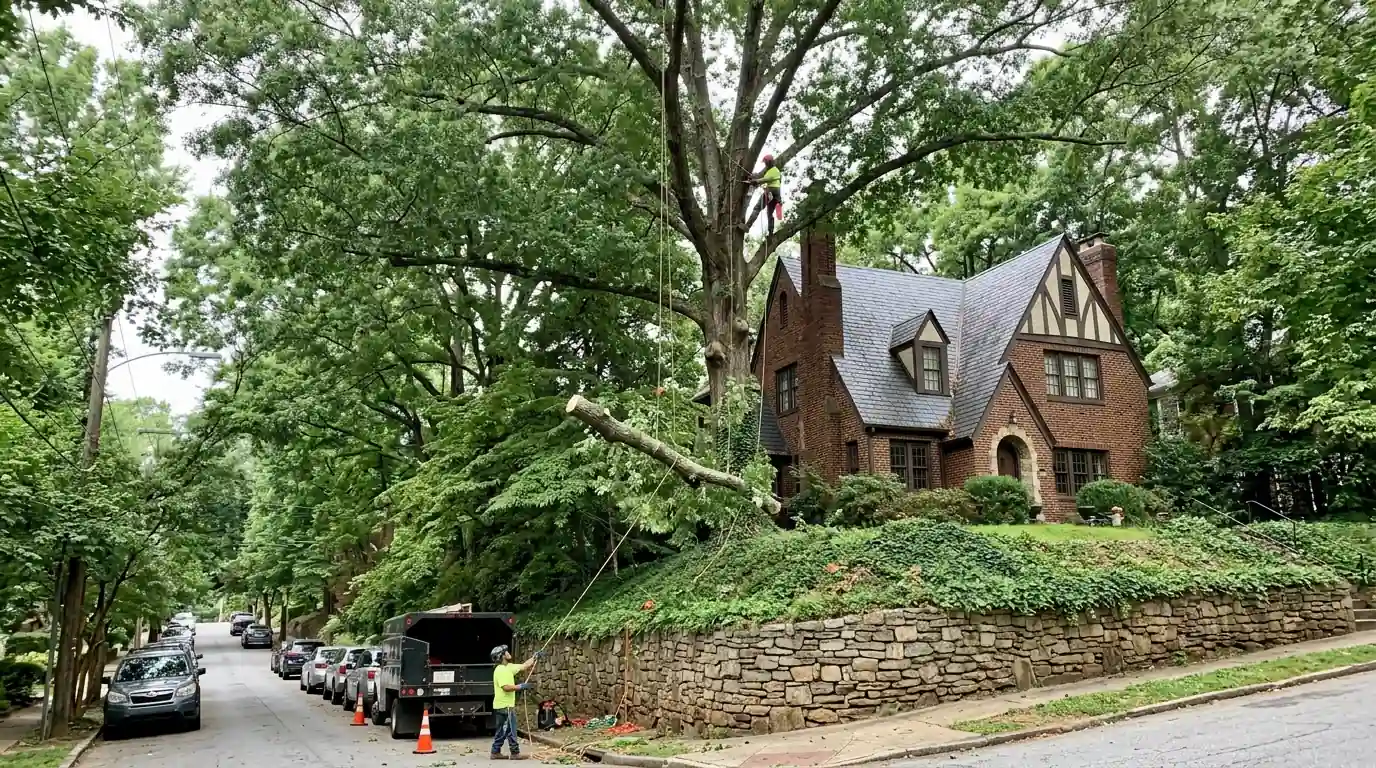
Slate changes how we work in Morningside. It cracks under a dropped branch and can't be walked on the way shingles can, so a climber works every limb above it from inside the tree. Each piece is tied off, cut and lowered clear of the roof edge, then swung out over the yard before it touches anything.
The oaks themselves are a mix. Willow oaks along the streets are mostly sound, if overgrown. Water oaks planted decades ago are another story: many have heart rot or hollow trunks, and the first sign is often one dead upper limb in a crown that otherwise leafs out green. We check for that on any oak over the house before pricing tree trimming, because trimming a tree that really needs a hazard removal wastes your money. Our water oak article explains why they fail.
Steep lots near the Morningside Nature Preserve
Streets that run down toward the South Fork of Peachtree Creek and the Morningside Nature Preserve get steep fast. Back yards fall away behind the houses, some held up by stone or concrete walls, and trees at the bottom of the slope are taller than they look from the street. Wood from those trees has to come uphill by rope or by hand, or stay on the slope in rounds if you'd rather leave it.
Near the preserve edge, English ivy and Chinese privet crowd the understory and climb the trunks. Ivy hides cracks and cankers and adds weight to a crown that may already lean downhill. Cutting it at the base and pulling it back from the bark is often the first step before we can judge the tree at all, which is where ivy and vine removal comes in.
Parked cars, narrow streets and the permit rules
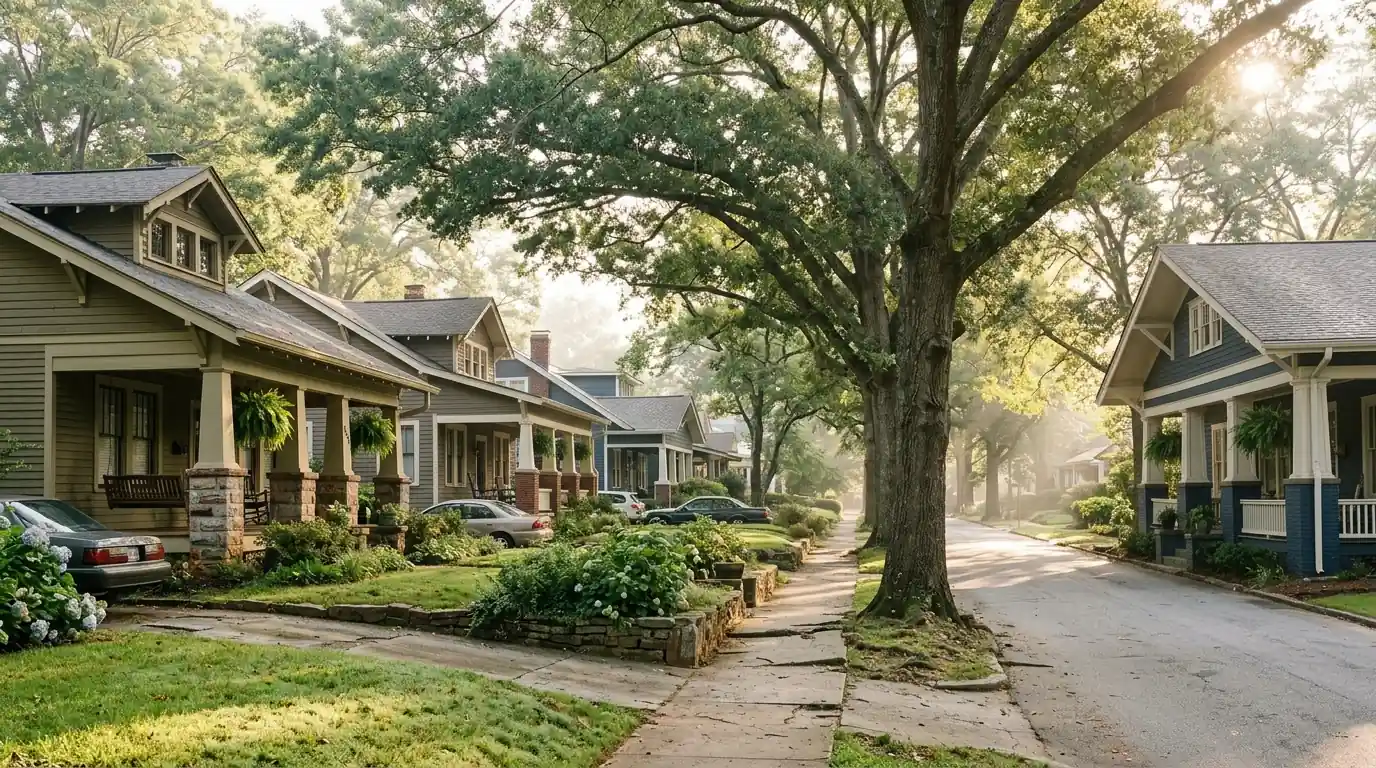
Many Morningside streets are too narrow for a chip truck to park without blocking someone. Cars line both curbs most days, and driveways are short and steep. We ask neighbors to move vehicles the night before, set out cones, and keep the chipper on the street only as long as it needs to be. Brush gets carried to it, never dragged across a lawn, the same routine we follow in Virginia-Highland.
Removing a private tree 6 inches or more at 4.5 feet needs an Arborist Division permit, and pines start at 12 inches. A dying water oak still needs that permit, but there's no application fee, the city inspects to confirm the condition, and no recompense is owed once it qualifies. If a storm drops an oak that ends up held by another tree or the house, no permit is needed: photograph it, notify the Arborist Division, and call our emergency line.