We remove, prune and clear tall pines and hardwoods across Johns Creek, mostly on half-acre to one-acre lots in subdivisions built in the 1990s, where loblollies stand a few yards from the house. Johns Creek sets its own tree rules, and lots within 2,000 feet of the Chattahoochee fall inside the state river corridor, so we check both before we quote. Call at any hour and we will set up a time to walk the yard.
Why so many Johns Creek pines are coming down now
When the big subdivisions off Medlock Bridge Road and State Bridge Road were cleared, builders kept clumps of loblolly pine between the houses to sell wooded lots. Thirty years on, those pines have long, bare trunks with small crowns perched at the very top, and they catch wind like a sail. Their roots stayed shallow in the compacted red clay around the foundations, so the whole tree pivots on a root plate that is far thinner than most owners expect.
The failures follow a pattern. A pine that stood fine for years starts to lean after a soaking rain, or a top snaps off in a summer thunderstorm and lands across the driveway. Ips engraver beetles move into pines stressed by a dry August, and the needles fade from green to rust within weeks. A dead pine near a roof isn't something to wait on, since the wood loses strength quickly once the beetles are done. Our guide to keeping, trimming or removing a tall pine covers the warning signs in more detail.
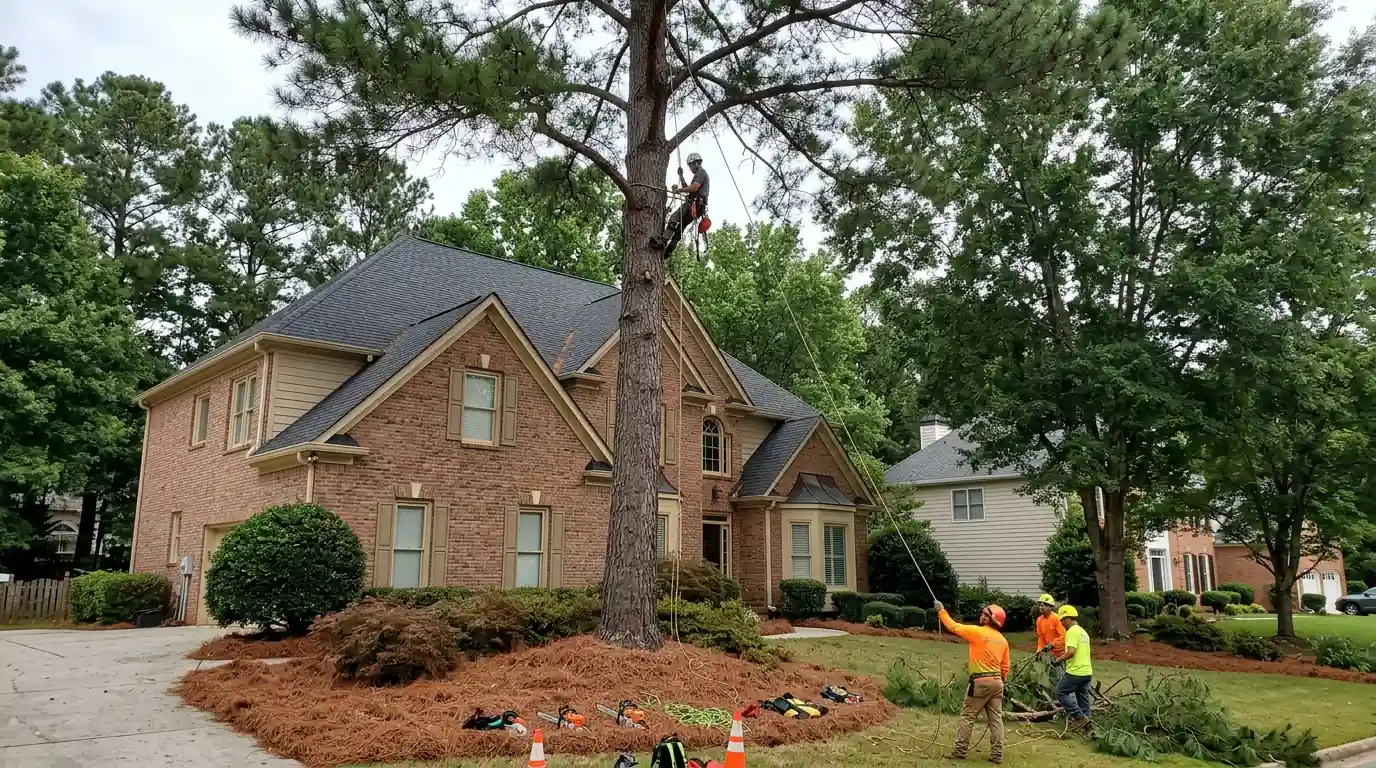
Working inside the Chattahoochee River corridor
The Chattahoochee forms the line between Johns Creek and Gwinnett County, and homes on the streets closest to the water often sit inside the corridor created by the Metropolitan River Protection Act. That corridor takes in land within 2,000 feet of the river, and work there is held to tighter limits on clearing and ground disturbance than an ordinary backyard.
For those lots, we check the address against the corridor first, then plan the job to move as little soil as possible. That can mean taking a dead tree down by hand, leaving the stump in the ground and carrying wood out over mats instead of driving equipment across a slope that drains toward the river. If a removal there needs city approval, you'll hear it from us before the quote, not after the first cut.
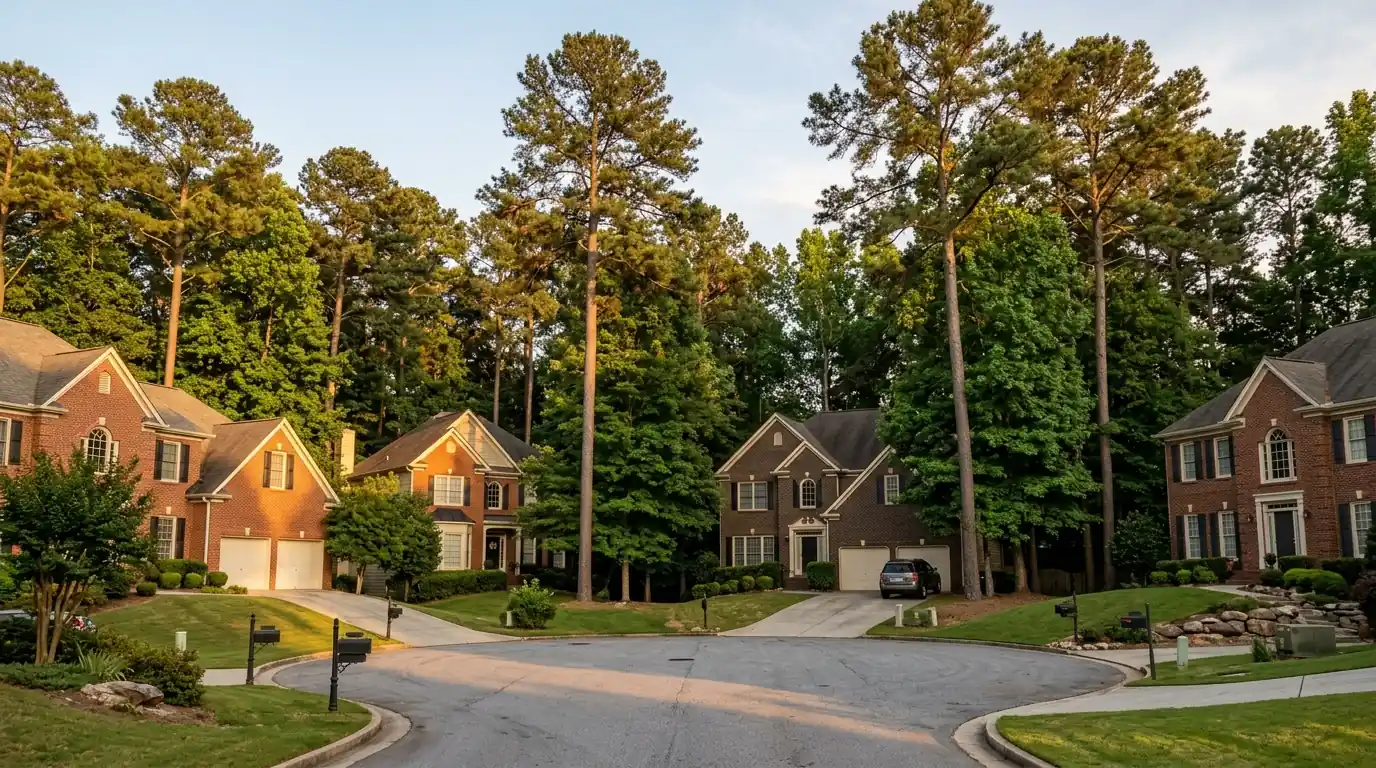
Pruning that keeps tall pines and hardwoods on the lot
Not every pine needs to go. Plenty of owners here want shade over the back deck and a screen from the house behind, so we raise the lower crown, take out dead limbs and clear branches off the roof instead of removing the tree. Pines don't recover well from heavy cutting, so we work in small amounts and never strip a trunk down to a tuft of green at the top.
The hardwoods get different treatment. On the wooded streets around Newtown Park, tulip poplars along the creek bottoms drop brittle limbs in drought, sweetgums push surface roots through lawns, and white oaks on the old farm edges between subdivisions carry long horizontal limbs over decks and pool patios. Careful crown thinning and some deadwood work usually buy those trees many more years. Across the river, the same pattern shows up in Duluth and Peachtree Corners.