Why there's no single price for a tree
People often ask what it costs to remove a 60 foot tree. The honest answer is that height is only one factor, and often not the biggest one. A tall pine standing alone at the back of an open lot might be one of the simplest jobs we do. A shorter oak leaning over a house, wedged between a fence and a neighbor's garage, can take a full day of climbing and rigging.
What follows is how we break a removal down when we price it. Our price guide has current typical ranges for the most common jobs in metro Atlanta, and those ranges move for the reasons below.
The factors that move the price
Every one of these can add or subtract time, labor or equipment from a job.
Access
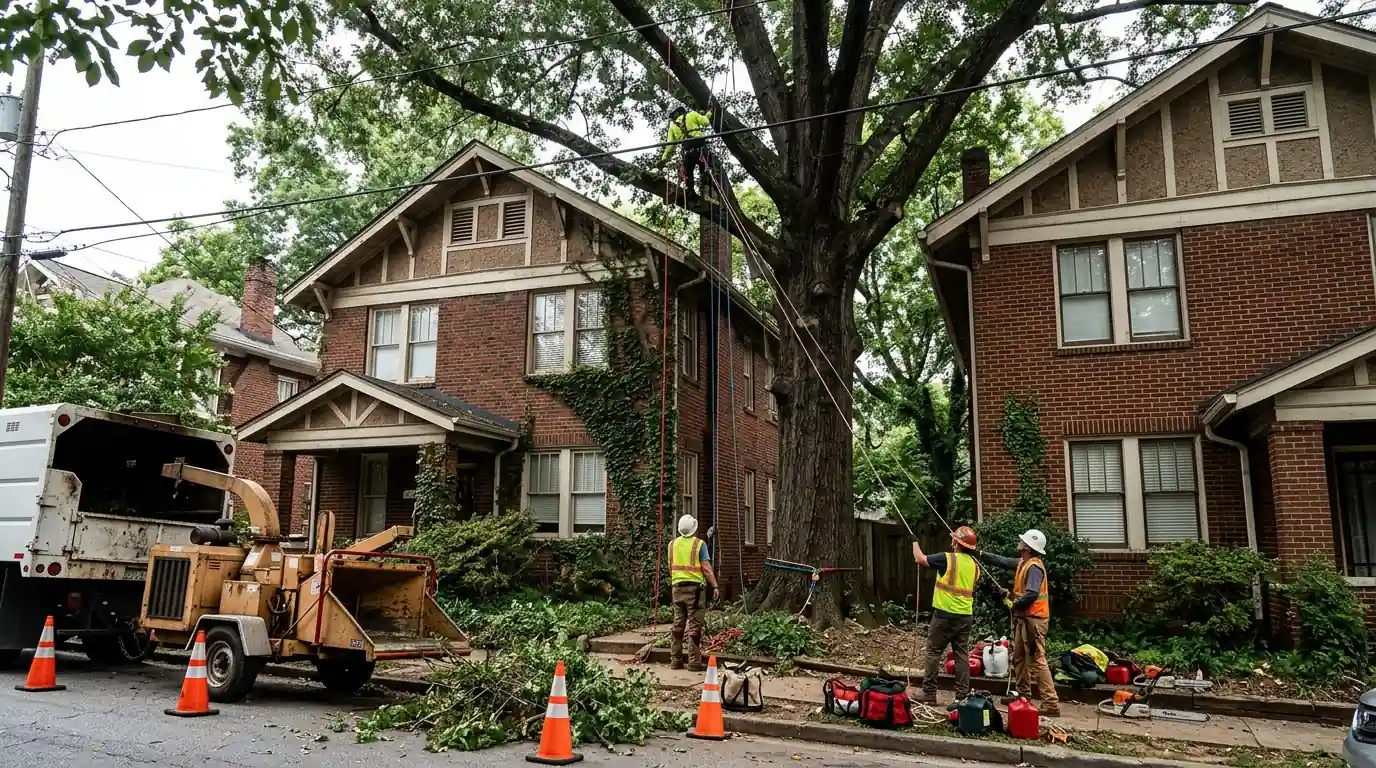
Access is the biggest driver on most Atlanta jobs. A truck and chipper parked beside the tree make for a quick day, while every limb carried through a narrow side gate and down a long backyard makes for a slow one. Steep driveways, terraced yards and soft ground after rain all slow the work. On tight intown lots, hauling the brush to the street can take as long as cutting the tree.
Height and spread
Taller trees and wider crowns mean more wood to cut, lower and haul, and more time aloft for the climber. Height matters most when combined with tight access or nearby targets.
Lean
A tree leaning away from the house and toward an open yard may be simpler to drop. A tree leaning toward the house, a driveway or power lines has to be pulled against its lean or taken down in small pieces, which adds rigging and time.
Targets
Targets are anything the tree could hit: the roof, gutters, a deck, an HVAC unit, a fence, a garden, a car, a neighbor's house. The more targets under the crown, the more of the tree has to be lowered on ropes instead of dropped. A tree with nothing under it is a very different job from one hanging over a slate roof.
Wood weight and condition
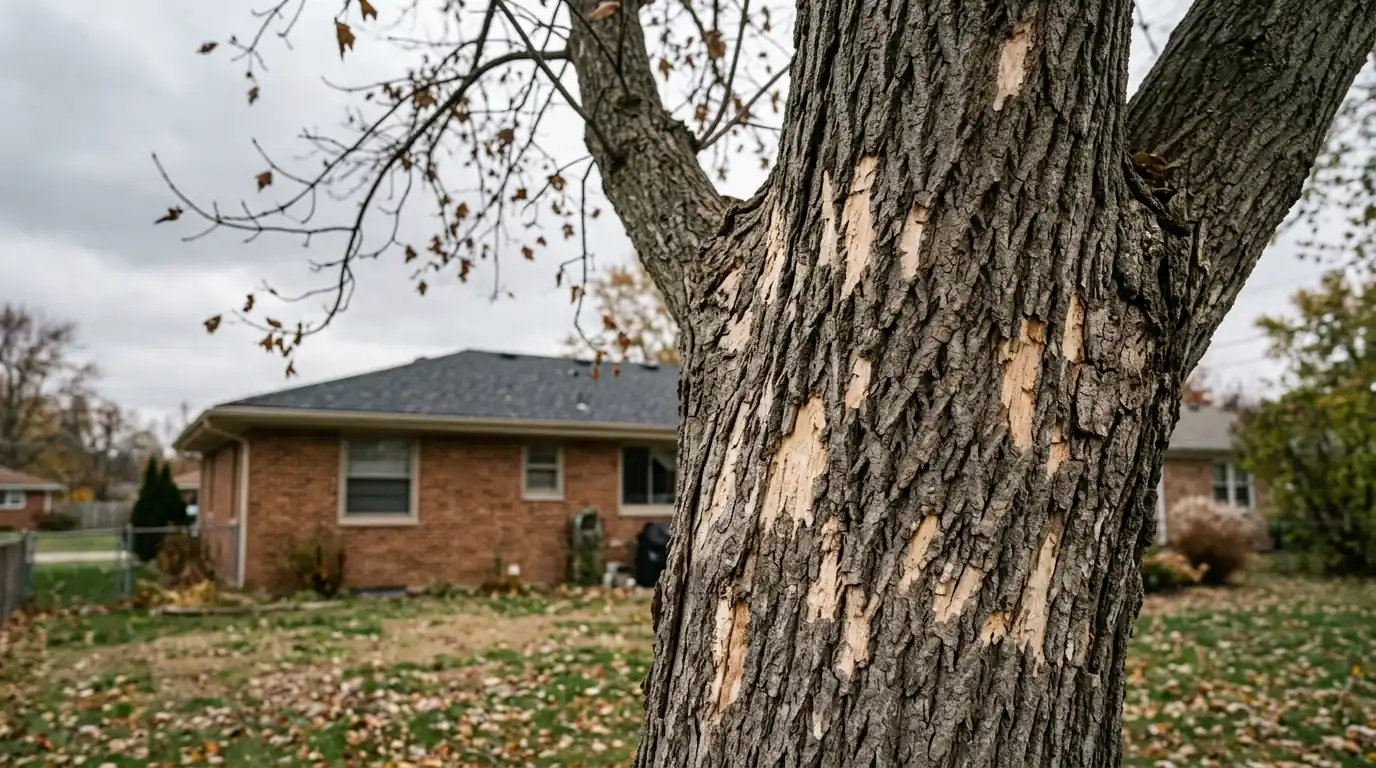
Oak is dense and heavy; pine is lighter. Green wood weighs more than dead wood, which affects how pieces can be rigged and how much the haul weighs. Decay matters too. A hollow or rotted tree may be unsafe to climb, which can push the job toward a crane or a bucket truck.
Crane
A crane is a big line item, but on the right job it can lower the total. It lifts large pieces out over the house in less time, and it's often the safest way to handle a decayed tree or a tree over a roof. The crane needs a spot to set up on the street or driveway, which isn't always available.
Permits
Inside Atlanta city limits, a private tree 6 inches or more in diameter at 4.5 feet, or 12 inches for pines, needs a permit before removal. Dead, dying or hazardous trees need one too, with no application fee. Brookhaven, Decatur and other cities have their own rules. The time spent measuring, photographing and filing is part of the job. Our permit guide covers each jurisdiction.
Stump
Most removal quotes leave the stump flush with the ground. Grinding it out is usually priced separately, and grinding needs a Georgia 811 locate first. Our post on grinding vs full stump removal explains the difference.
Hauling
Brush is usually chipped on site. The logs are another matter. Hauling them away takes truck space and disposal time, while leaving them cut to firewood length or in rounds may cost less. Make sure you know which one a quote includes.
Emergency timing
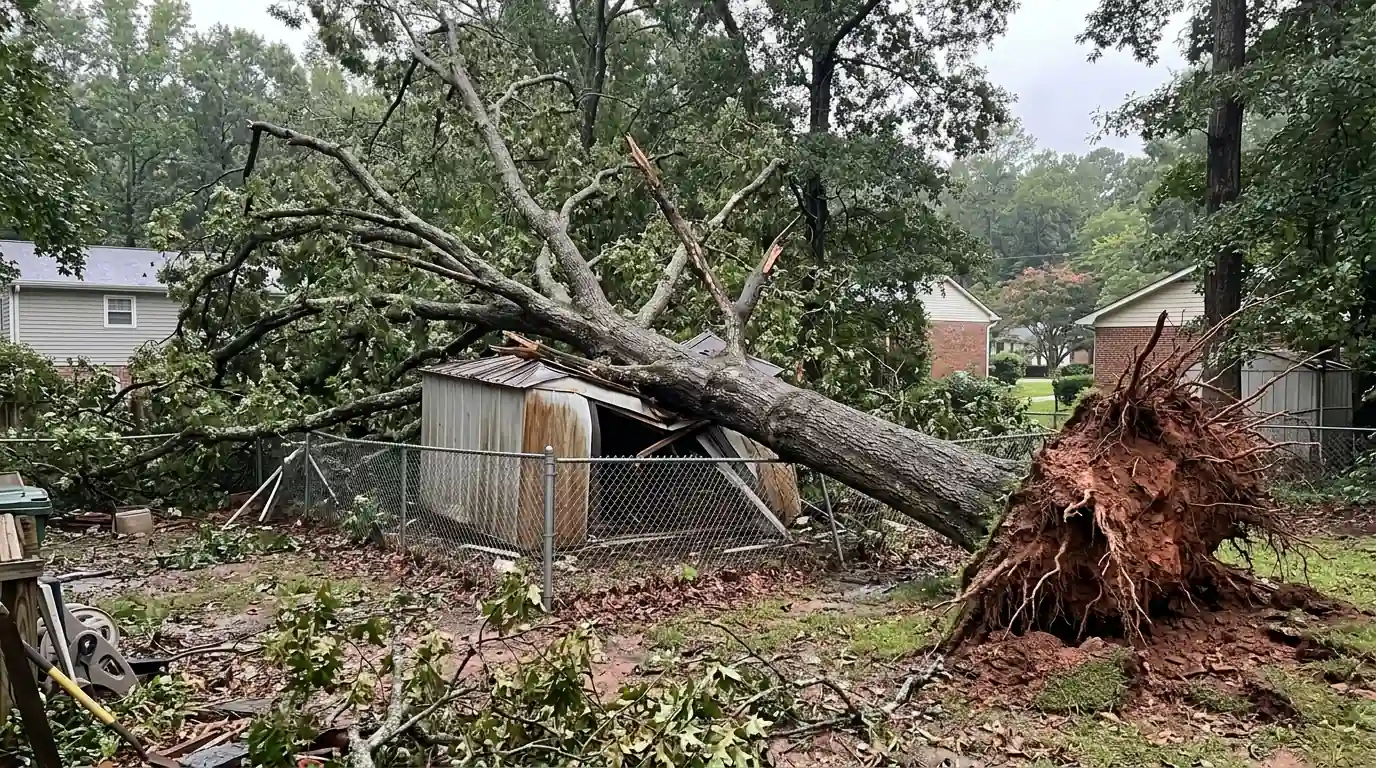
A tree on the house at night or in a storm is a different job from a planned removal. Emergency work happens in bad weather, often in the dark, with the tree under tension and sometimes tangled with lines. Storm and emergency work is priced to reflect that.
Why three quotes can be far apart
When you get three quotes for the same tree, the differences usually come from a few places. One crew plans to climb and lower in sections, another wants a crane, a third thinks it can drop the tree whole. Each method has a different cost, and only one of them may suit your yard. One quote includes hauling the logs and another leaves them in the yard. One includes the stump. One includes permit work and another expects you to handle it.
Coverage and cleanup can differ as well. Some crews protect the lawn with plywood mats, rake and blow the yard, and haul every twig. Others leave more of the cleanup to you. And sometimes a very low quote simply leaves out a step, such as the permit or the rigging needed to protect your roof.
Lining up quotes side by side by what they include, not just the final number, usually explains most of the difference.
Questions to ask with every quote
These questions help you compare quotes on equal terms. Ask them of every company you talk to, including us.
- How will the tree come down: felled whole, climbed and lowered, or lifted with a crane?
- Is the stump included, and if it is, how far below grade will it be ground?
- Will the logs be hauled away, cut for firewood or left in rounds?
- Is the permit work included, and who files the application?
- How will the lawn, driveway and plantings be protected?
- What cleanup is included at the end of the day?
- What happens if the tree turns out to be hollow or decayed once work starts?
Ways to keep the cost reasonable
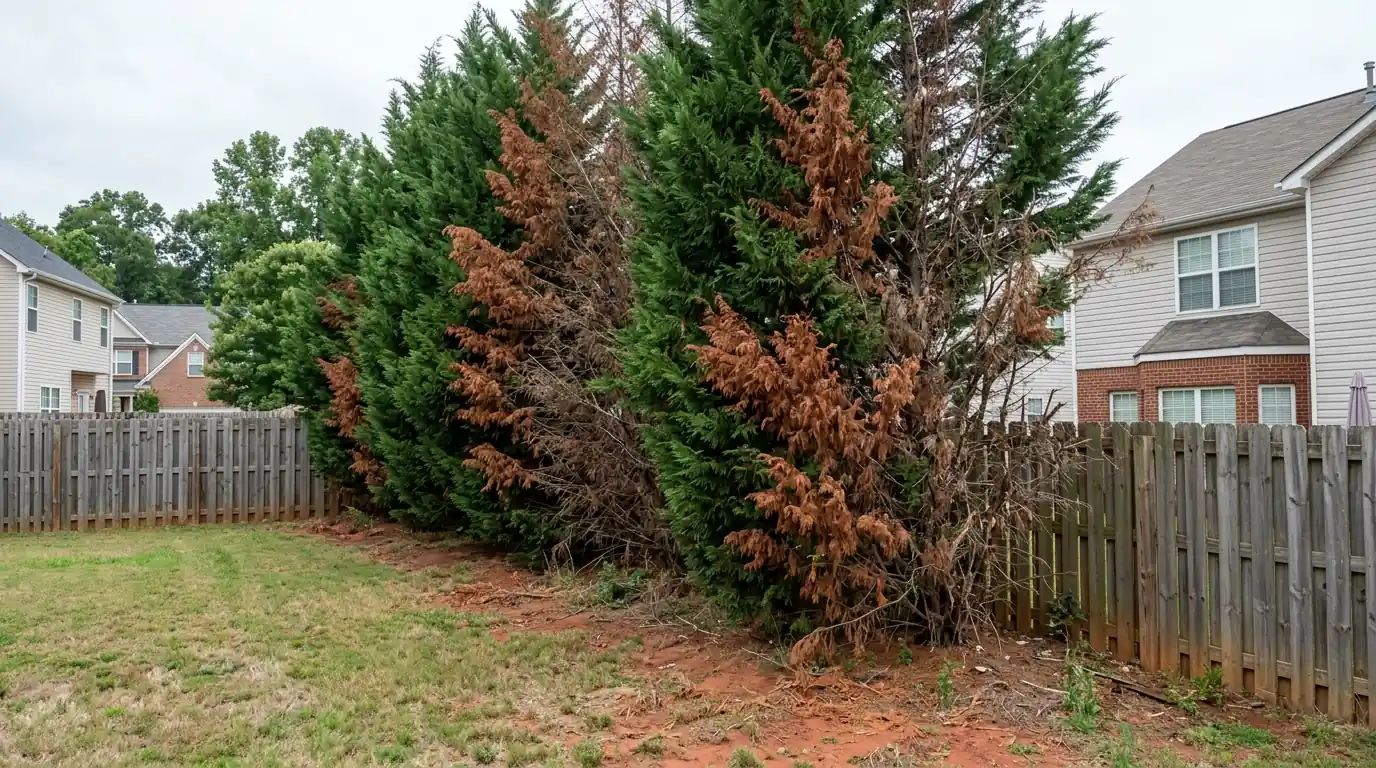
A few things are within your control. Removing several trees in one visit spreads the setup cost. Keeping the logs for firewood can save on hauling. Clearing patio furniture, cars and planters out of the work zone before the crew arrives saves time on the day. And dealing with a dying tree while it's still sound is almost always less expensive than waiting until it has to be handled as an emergency.
If you're not sure whether a tree needs to come down at all, a risk assessment may show that pruning or support will do. And if the tree does need to go, our tree removal service explains how the work is done, and crane removal covers the large jobs over roofs.
Getting a price for your tree
We give prices after seeing the tree, the yard and what's around it. On the visit we look at access, lean, targets, condition and the permit rule for the address, then walk you through how we'd take it down and what the quote includes. The same factors set the price in Sandy Springs as in Cascade Heights, even though the lots, the trees and the rules look different.
If the quote changes after work starts, it should be for a reason you can see, such as hidden decay in the trunk that changes how the tree has to come down. We explain that on the spot, before the extra work goes ahead, so the number you agreed to is the number you pay unless the tree itself forces a change.
Key takeaways
- Access, lean and targets often matter more to the price than the tree's height.
- Wood weight, decay, crane use, permits, the stump, hauling and emergency timing all move the cost.
- Quotes differ mostly in method and in what they include, so compare them line by line.
- Removing a dying tree before it becomes an emergency is usually the less expensive path.