Safety comes before the property line
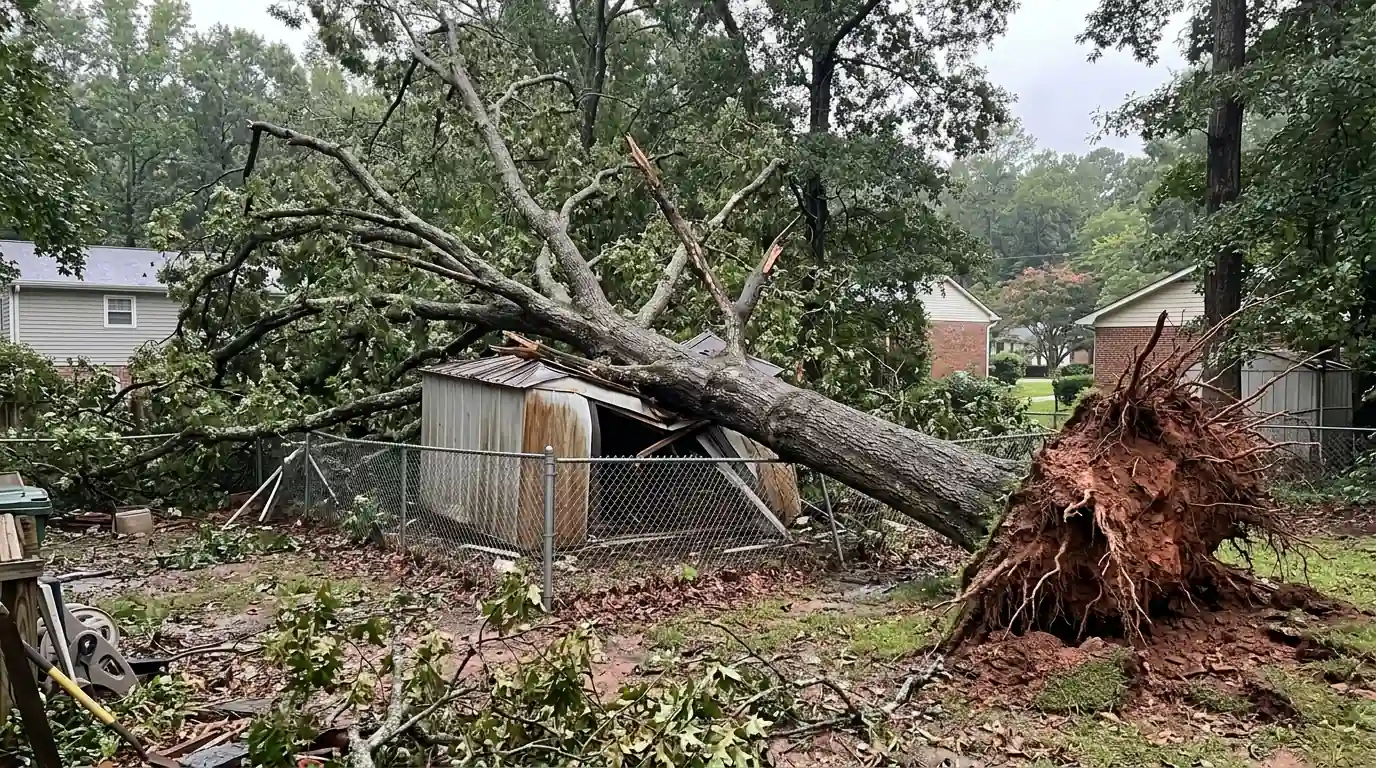
Whose tree it was doesn't matter for the first few minutes. Get everyone away from the fallen trunk and out from under the trees around it, since a storm that drops one tree often leaves cracked limbs hanging in the next. If the tree hit the house, move people out of the affected rooms and the rooms below. A trunk resting on a roof or a fence can shift as limbs break or as rain adds weight.
Call 911 if anyone is hurt or trapped, or if you smell gas or see smoke. Otherwise, don't cut anything yet. Limbs pinned under a fallen trunk are loaded like springs, and a chainsaw cut in the wrong place can drop the trunk or whip a limb back at the person holding the saw. Our post on the first hour after a tree hits the house walks through the safety steps in more detail.
Treat any wire as live and call the utility
If the tree brought down a line or is resting on one, assume it's energized, even if your lights are out and even if it looks like a cable or phone line. Keep everyone well back, including the neighbor who comes over to look. Wet grass and puddles can carry current away from the wire.
Report it to Georgia Power, or to whichever electric utility serves your street, and wait for them to make it safe. The utility handles its own lines. Clearing the tree and the storm debris afterward is the property owner's job. Our crews never cut around a live line, so a tree tangled with wires waits until the power company has been out.
Photograph everything before anything moves
Photos are your record of what happened, and they help whichever insurer ends up handling the claim. Take them from a safe spot, before the tree is cut, before the neighbor drags limbs off the fence and before the rain washes the scene.
- Wide shots showing where the tree stood, where it landed and the property line between them.
- Close shots of every damaged item: roof, gutters, siding, fence, shed, car, garden beds.
- The base of the tree: the stump, the break or the lifted root plate.
- Any decay you can see, such as a hollow trunk, rotten wood at the break or mushrooms at the base.
- The date and time, and a note of the weather that day.
Why the base of the tree matters
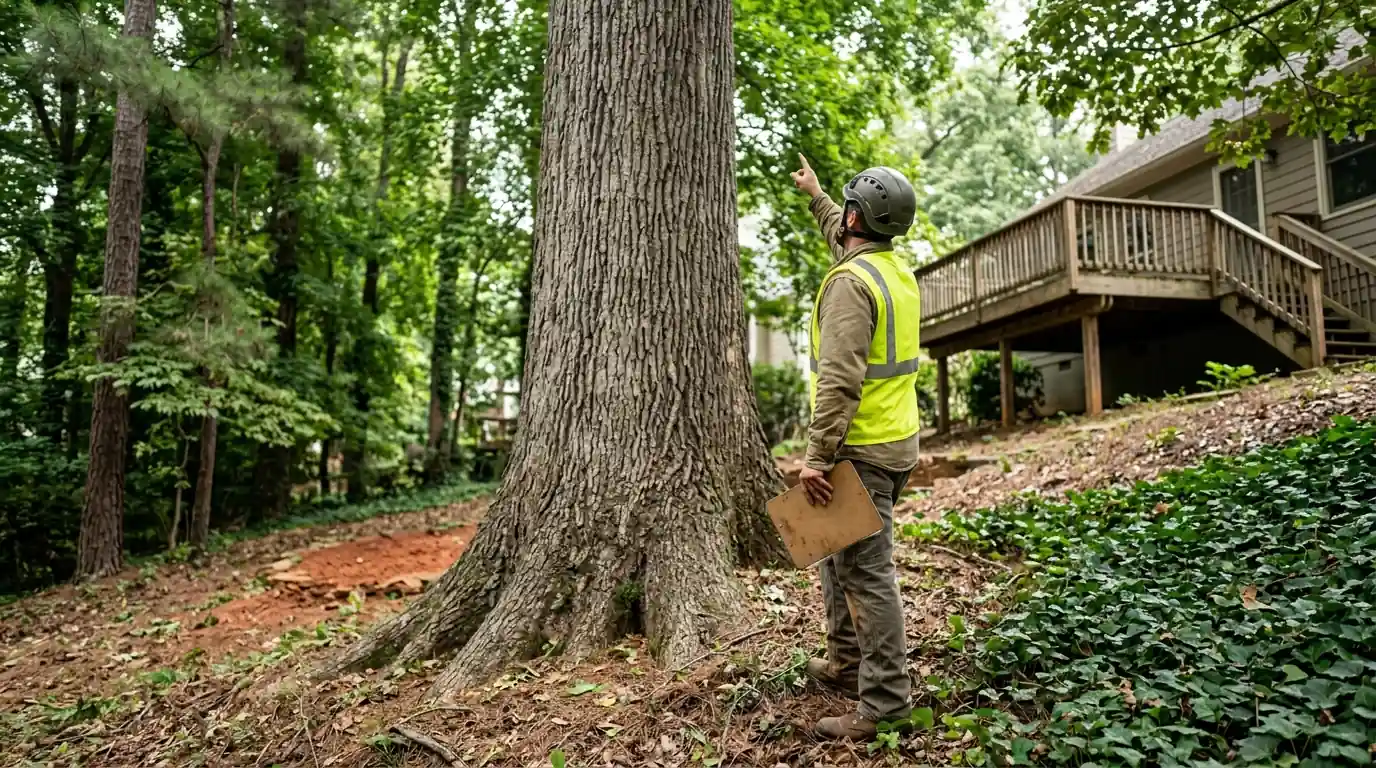
How a tree failed often says a lot about its condition before the storm. A clean break through sound wood or a root plate torn out of soaked clay points to the weather. A trunk that snapped at a hollow, a base full of punky wood or a crown that was already bare points to a tree that was in trouble beforehand. Get those photos before the evidence is cut up and hauled away.
Call your own insurer first
It feels natural to call the neighbor's insurance company, since it was their tree. In many cases, though, your own homeowners policy is where the claim starts, because it covers damage to your house and other covered structures no matter whose tree caused it. Your insurer can then decide whether to pursue the neighbor's carrier if it believes the neighbor was at fault.
Ask your insurer what it needs and whether it wants an adjuster on site before the tree comes off. Many insurers will tell you to go ahead with emergency removal to prevent more damage, then want the paperwork from the crew that did it. Keep every receipt. Coverage for removing the tree itself, especially when it fell in the yard without hitting a structure, varies a lot by policy, so ask about that directly.
Talk to your neighbor early
Most of these situations get settled between neighbors without much trouble, and the sooner you talk, the easier it is. Let them know what happened, share your photos, and tell them you've called your insurer. Ask them to call theirs too. Agree on who is arranging the removal so two crews don't show up, or so no one waits on the other while rain comes through a damaged roof.
Be careful about what anyone agrees to in the first conversation. A promise to pay for everything, or a statement that it's all your problem, can be hard to walk back later. It's fine to say you'll both let the insurers sort out the money and focus on getting the tree off the property safely.
How fault usually works in Georgia
This section is general information, not legal advice. Every case turns on its own facts, so for a specific situation ask an attorney or your insurer.
The general idea in Georgia is that a tree owner usually isn't responsible for damage when a healthy tree falls in a storm. A sound tree blown down by high winds or uprooted from saturated ground is generally treated as something no one could have prevented. Tropical Storm Helene, which soaked the ground and uprooted trees onto homes across metro Atlanta on September 27, 2024, brought exactly that kind of weather.
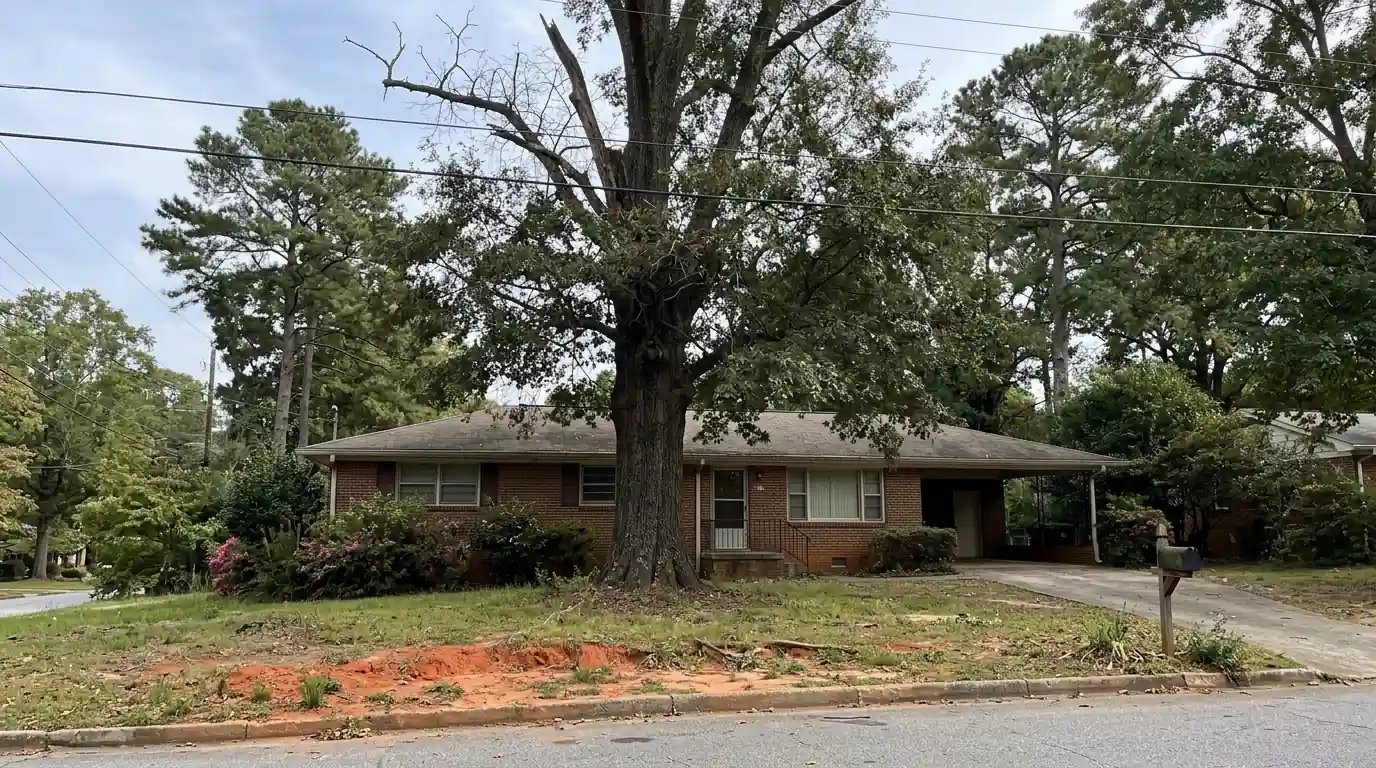
The picture changes when the owner knew, or reasonably should have known, that the tree was dead, decaying or dangerous and did nothing about it. A tree with a bare crown, a large visible cavity or a lean that kept getting worse is the kind of thing that can shift responsibility toward the owner. That's why the condition of the tree before it fell matters so much, and why your photos of the base and the break are worth taking.
If you see a hazard tree next door before it falls
A neighbor's dangerous tree is far easier to deal with before the storm than after it. If a tree next door is dead, hollow or leaning over your house, talk to your neighbor first, then follow up in writing. A short, polite letter or email that describes the tree, where it stands, what you've seen and when, with dated photos attached, creates a clear record that the owner was told.
Keep a copy. Many owners simply don't know a tree is failing until someone points it out, and a written note often gets it handled. An independent tree risk assessment gives both of you a plain description of the tree's condition to work from, which takes some of the guesswork and the tension out of the conversation. If the tree does need to go, removing a hazard tree before storm season is far easier than cleaning up after it falls.
Getting the tree off your property
Once the lines are safe and the photos are taken, the tree can come off. Our emergency tree removal crews take the weight off structures first, lowering limbs on ropes or lifting pieces with a crane rather than dragging them across the roof. Storm debris cleanup handles the rest of the yard, and we give you itemized paperwork for whichever insurer is paying.
Inside Atlanta city limits, a tree that has already fallen and is held up by the ground, another tree or a structure needs no removal permit. Photograph it where it lies and notify the city's Arborist Division. A tree that is cracked or leaning but still standing next door is different: it counts as a hazardous tree and still needs a permit, though there's no application fee. Our guide to tree permit rules covers the other cities and counties around the metro.
Key takeaways
- Get people clear, treat every wire as live and call the utility before anyone touches the tree.
- Photograph the damage, the property line and especially the base of the tree before anything is moved.
- In many cases your own homeowners policy is where the claim starts, even when the tree was the neighbor's.
- In general, a healthy tree that falls in a storm is not the owner's fault, while a tree the owner knew was dead or dangerous may be.
- This is general information, not legal advice, so ask an attorney or your insurer about your specific case.