Dormant season versus summer pruning
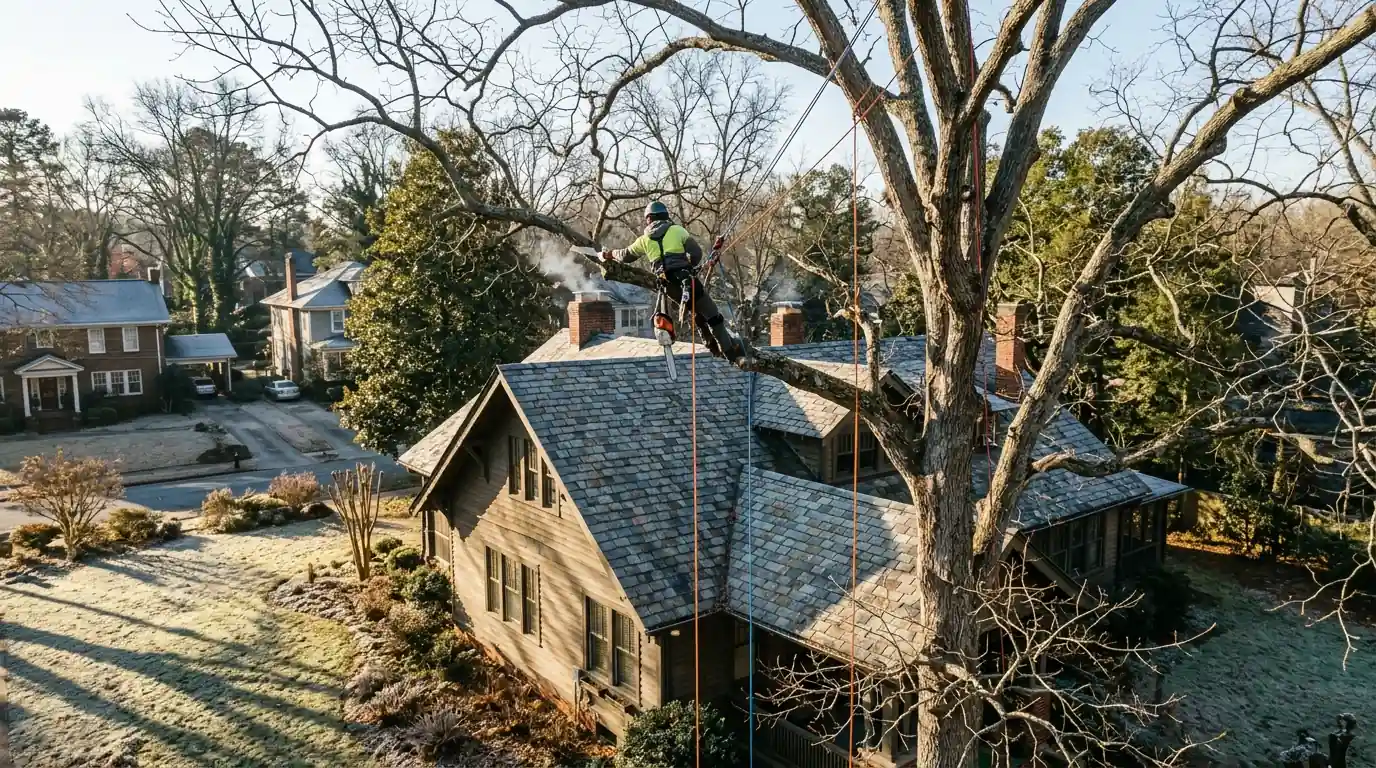
Most of the structural pruning we do happens in the dormant season, from late fall through late winter, roughly November into early March in the Atlanta area. With the leaves off, we can see the whole branch structure, spot crossing limbs and weak forks, and make cleaner decisions. Many of the insects and fungi drawn to fresh wounds are inactive in the cold. The tree also pushes new growth in spring, which helps close the cuts quickly.
Summer pruning has its place. Once leaves are fully out, it's easier to see which limbs are dead, which branches hang too low over a driveway or roof, and how much shade a crown really casts. Light thinning and clearance cuts in summer are fine for most species. What we avoid is heavy pruning during a hot, dry stretch, since that adds stress to a tree already short on water.
Late summer into early fall is the one window where we go lightest. Heavy cuts then can trigger a flush of tender growth that doesn't have time to harden off before the first frost.
Species by species
These are the trees we prune most in Atlanta yards, with the timing that suits each one.
Oaks
Prune oaks in the dormant season when you can. Fresh wounds on oaks in spring and early summer can attract insects and give disease a way in, and stressed oaks are already prone to hypoxylon canker and bacterial leaf scorch. Winter is also the easiest time to see the dead upper limbs that aging water oaks carry. Removing a broken or hanging limb can't wait for winter, of course, and that work gets done whenever it's needed.
Pines
Pines need very little pruning, and when they do, late fall and winter are the right time. Fresh pine resin draws bark beetles, including southern pine beetles and Ips engravers, and they're most active in the warm months. Removing dead limbs and storm-broken branches is the main reason to prune a pine. Our post on tall pines near the house explains why heavy trimming rarely helps them.
Crape myrtles
Late winter, around February into early March, before new growth starts. Crape myrtles bloom on new wood, so pruning then doesn't cost you any summer flowers. Keep it to suckers, crossing branches and dead wood, and never top them. Our guide to crape myrtle pruning goes step by step.
Dogwoods
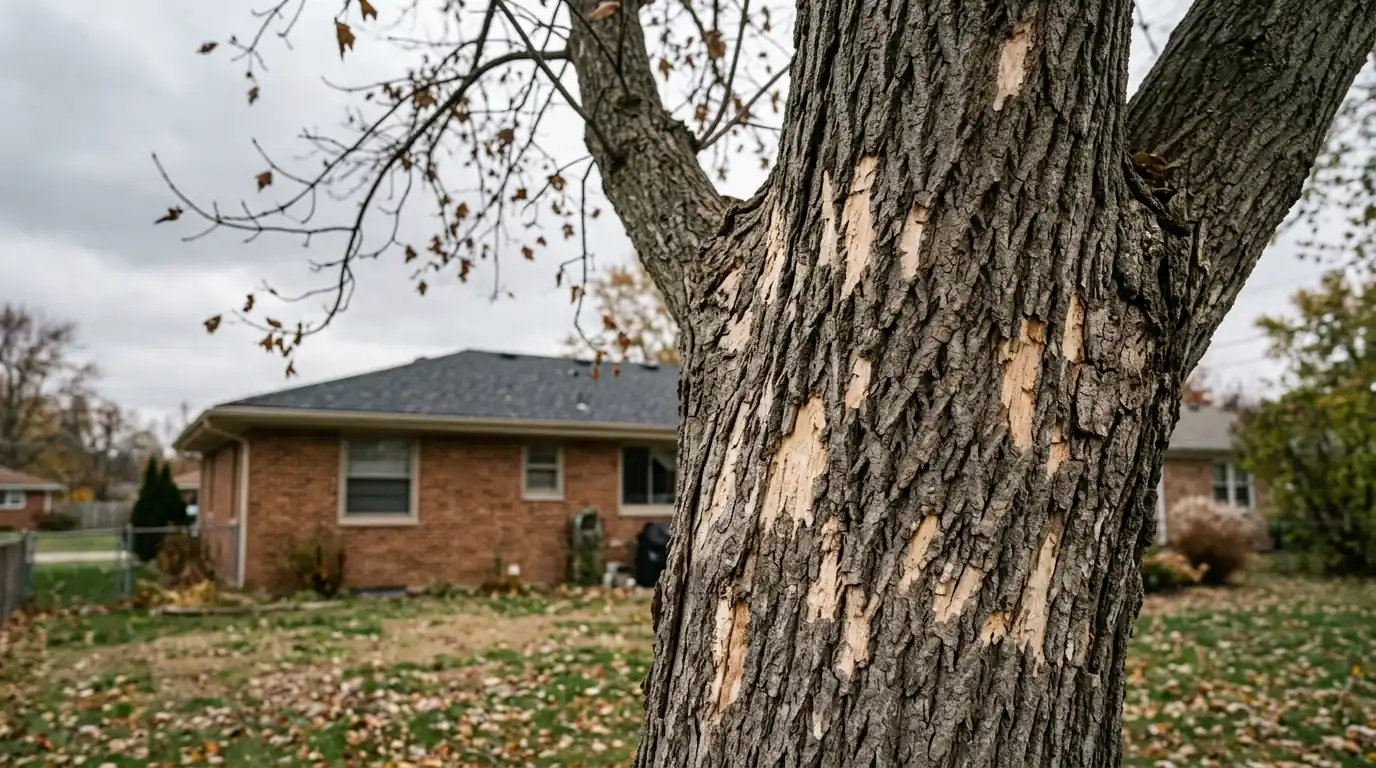
Dogwoods set next spring's flower buds the summer before, so heavy winter pruning cuts off bloom. Prune lightly right after flowering, or in winter if you accept fewer flowers. Avoid wounding the trunk with string trimmers or mowers, since bark damage invites borers. Dogwoods are also prone to anthracnose, and opening up a dense crown for better air flow helps leaves dry faster.
Maples
Red maples and Japanese maples can be pruned in the dormant season, but they often bleed sap from cuts in late winter as the sap starts moving. The bleeding looks alarming but does little harm. If it bothers you, prune in early summer after the leaves are fully out. Japanese maples need only light, careful cuts, which is the kind of work our ornamental tree pruning focuses on.
Tulip poplars, sweetgums and other big shade trees
Tall tulip poplars and sweetgums are pruned mostly for clearance and dead wood, and the dormant season works well for both. Tulip poplars carry brittle limbs and often drop yellow leaves early in a dry summer, which is stress rather than a reason to prune. Sweetgum work in winter also lets us remove the low limbs that drop gumballs on a patio before the next crop sets.
Spring-flowering trees
Redbuds, flowering cherries, southern magnolias and other trees that bloom from buds set the previous year should be pruned right after they finish flowering. That gives them the rest of the growing season to set new buds. Callery or Bradford pears are a special case: their weak V-shaped forks tend to split, and removing or reducing a split-prone leader can be done whenever you notice the problem.
Storm-prep pruning before hurricane season
Atlantic hurricane season runs from June through November, and Atlanta often gets the soaking rain and gusty winds of tropical systems that come ashore on the Gulf or the Atlantic coast. Tropical Storm Helene on September 27, 2024, soaked the ground and uprooted trees onto homes across the metro. Late spring and early summer are a sensible time to look over the big trees near your house before the busiest weeks of the season.
Storm-prep pruning is not about cutting trees down to a smaller size. It focuses on the specific limbs and defects most likely to cause damage. Done right, it lets the crown move with the wind rather than catching it like a sail.
- Remove dead limbs and broken hangers, especially over the roof, driveway and play areas.
- Shorten long, heavy limbs that reach over the house back to a healthy side branch.
- Thin a very dense crown lightly so wind can pass through it.
- Check forks and unions for cracks, and consider cabling where a split is starting.
- Look at the soil at the base for heaving or cracks, which pruning can't fix.
Work that can't wait for the right season
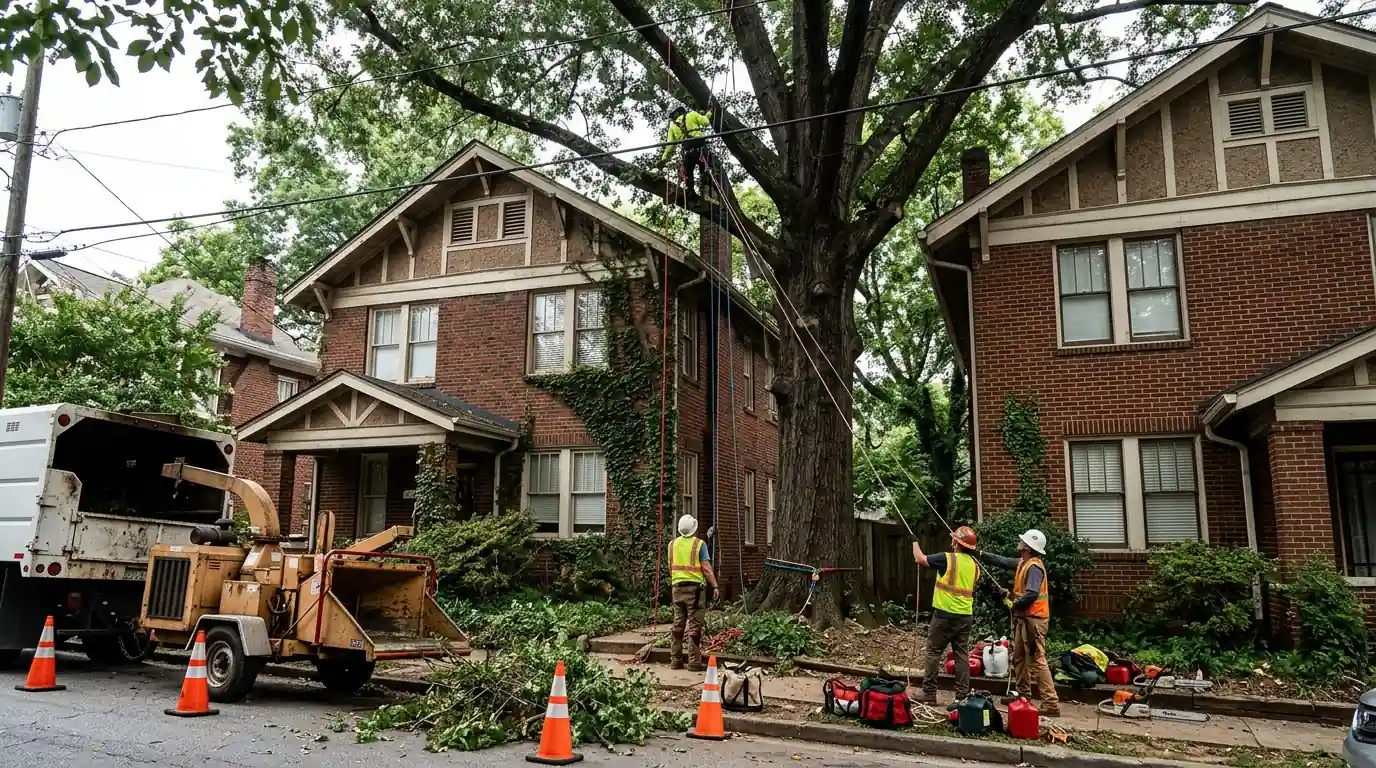
Timing is a preference, not a rule, when safety is involved. A cracked limb over a bedroom, a dead branch over a sidewalk or a broken top hanging in a pine should come out as soon as it's found, whatever the month. The same goes for limbs rubbing a roof or touching a service line. For the line itself, report it to Georgia Power and keep clear, since we never cut around a live line.
Cutting out dead wood is year-round work. Dead branches don't bleed, don't attract beetles the way fresh live cuts do and don't set back the tree's growth, so there's no penalty for removing them in the middle of summer.
Never top, in any season
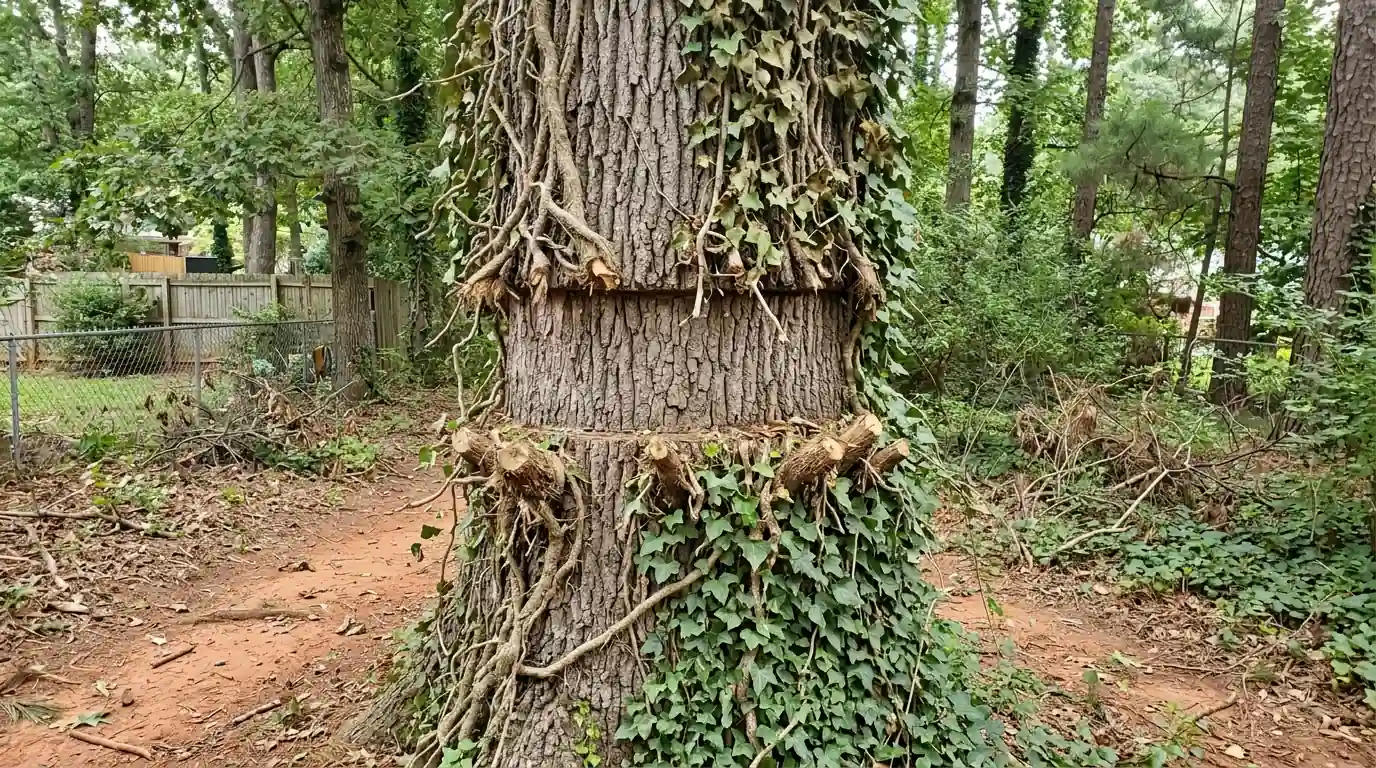
Topping means cutting the main stems or large limbs back to stubs to make a tree shorter. It's never the right choice in any month. Topped trees respond with dense clusters of weakly attached sprouts that break easily, and the large stub cuts decay. A topped tree often ends up more dangerous and more expensive to maintain than it was before.
If a tree really is too big for its spot, a proper crown reduction shortens limbs back to healthy side branches that can take over the growth. When even that won't fit the space, removal and replanting with a smaller species is usually the better path.
Putting it on a calendar
Most yards have a mix of trees, and it's easier to schedule the work in two or three visits a year than to remember each species on its own. A winter visit covers oaks, pines, crape myrtles and structural pruning. A spring visit after bloom covers dogwoods, redbuds and flowering cherries, plus a storm-prep look at the big trees. Anything urgent is handled whenever it comes up.
Our tree care plans set up that schedule for you. For a one-time cleanup, our trimming crews work across the metro, from the old canopies of Ansley Park to the wooded lots of Dunwoody.
Key takeaways
- Most structural pruning is done in the dormant season, roughly November through early March in Atlanta.
- Prune oaks and pines in winter, when insects drawn to fresh wounds are least active.
- Dogwoods, redbuds and other spring-flowering trees should be pruned right after they bloom.
- Storm-prep pruning in late spring targets dead limbs, heavy overhangs and weak unions before hurricane season peaks.
- Dead wood and hazards come out any time, and topping is never the right answer.