Why the scope matters more than the total
Two quotes can land close together and describe very different jobs, or sit far apart because one leaves out half the work. The total only means something once you know what it pays for. A one-line quote that says "remove oak" and a number tells you almost nothing about how the tree will come down, what happens to the wood, or what your yard will look like when the crew leaves.
Our post on what drives tree removal costs covers why prices move with access, lean, targets and wood weight. This one is about the document itself: what should be written down, and how to read it. When you want a sense of typical ranges for common jobs, the price guide has them.
What a good written quote spells out
A solid quote reads like a short work plan. You should be able to picture the day from it. These are the items we put on ours, and the ones worth looking for on anyone's.
The removal method
The quote should say how the tree comes down. Felled means it's notched and dropped in one piece, which needs a clear landing zone longer than the tree is tall. Climbed and lowered means a climber takes it apart from the top, lowering limbs and trunk sections on ropes, which is how most trees near houses come down. Crane means pieces are cut and lifted out over the house. Each method fits a different yard, and the method drives most of the cost. If a quote doesn't name one, ask.
Cleanup, wood and brush
Look for a plain description of what's left when the crew leaves. Brush is usually chipped on site, but some quotes leave the chips and some haul them. The logs might be hauled away, cut to firewood length, or left in rounds where they fell. Raking, blowing off the driveway and picking up small debris should be stated, not assumed.
The stump
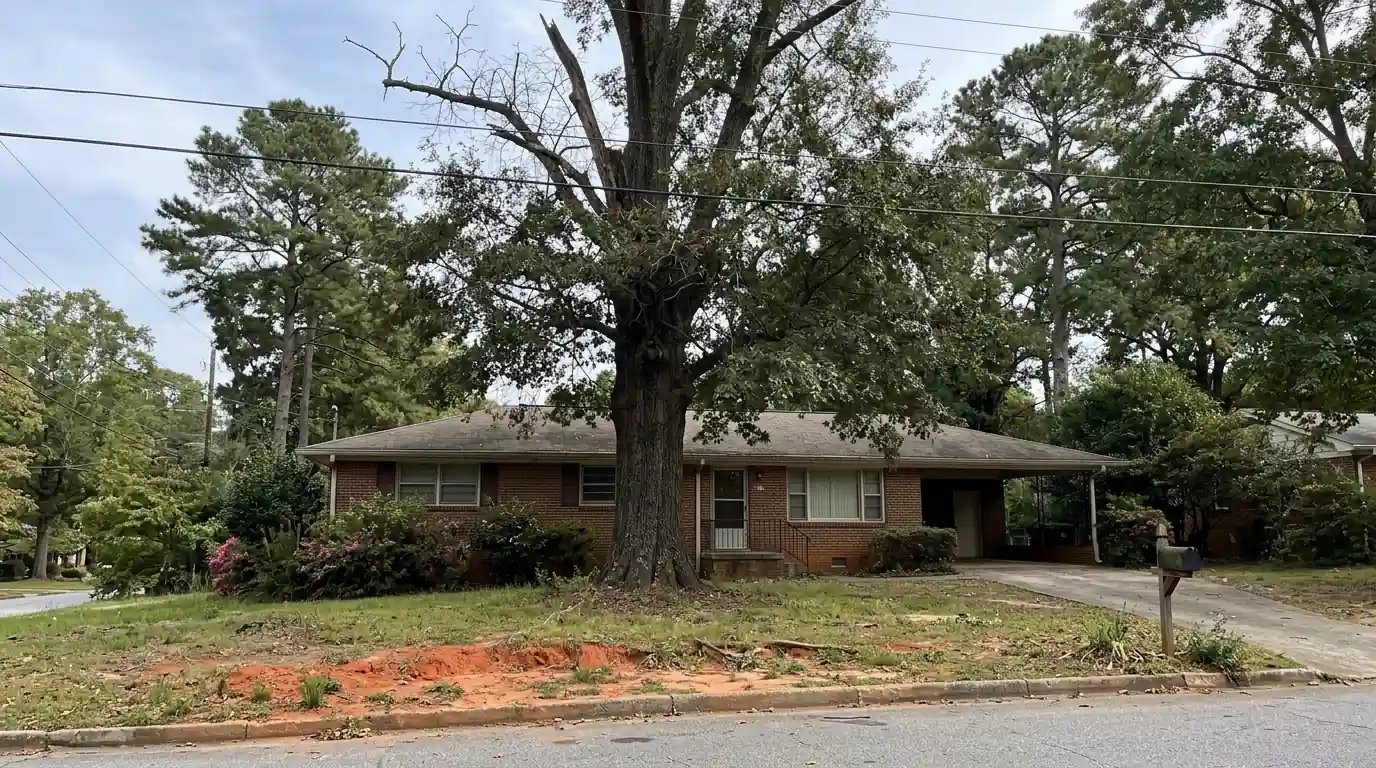
Many removal quotes leave the stump flush with the ground. If grinding is included, the quote should say so, and say roughly how far below grade it will be ground and whether the grindings are hauled or left to fill the hole. If it isn't included, the quote should say that too, so it doesn't come up as a surprise later. Our stump grinding service is priced as its own line for exactly this reason.
Permit paperwork
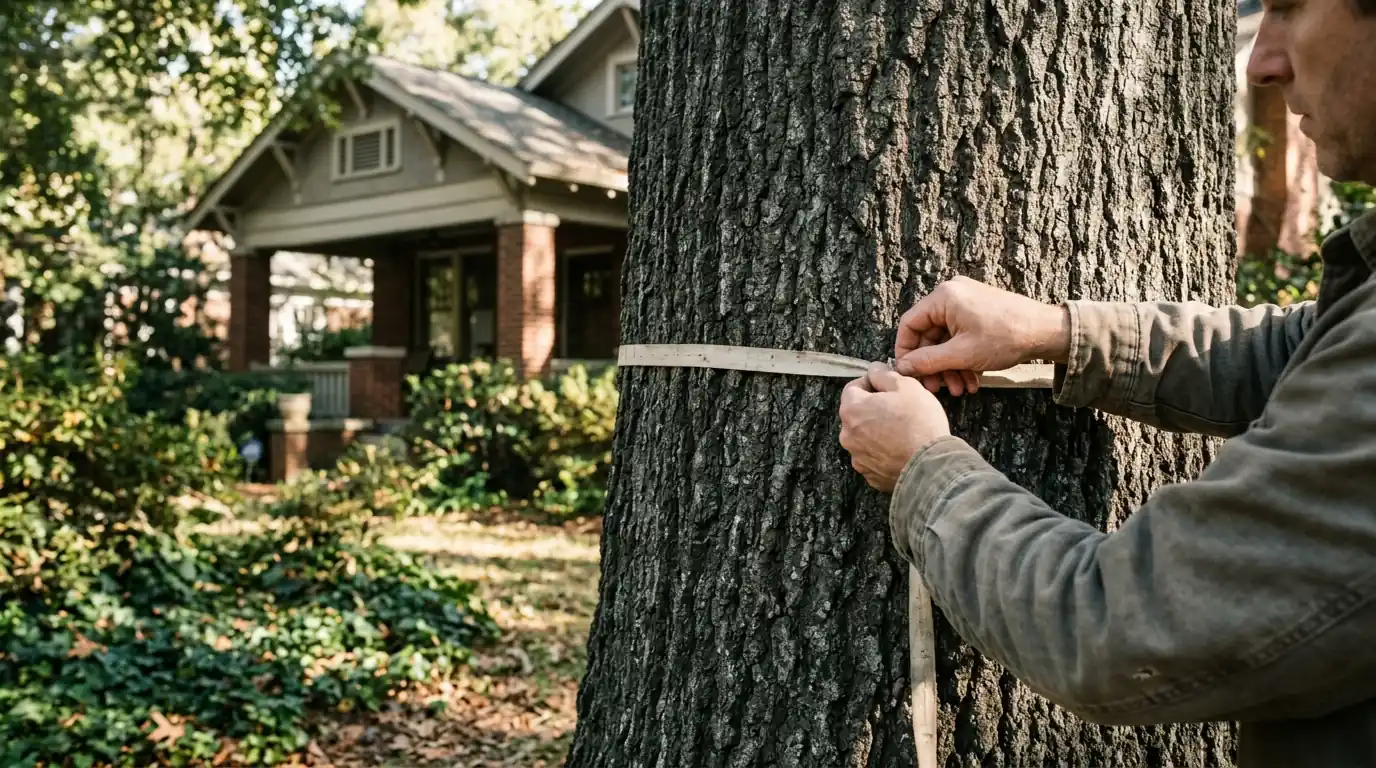
Inside Atlanta city limits, removing a private tree 6 inches or more in diameter at 4.5 feet above grade needs a permit, and pines start at 12 inches. Dead, dying or hazardous trees still need one from the Arborist Division, with no application fee. Brookhaven, Decatur and parts of DeKalb have rules of their own. A good quote says who files the paperwork and whether that time is included. The permit checker shows which rule covers an address.
Georgia 811 and underground lines
Grinding a stump or cutting roots counts as mechanized digging, and Georgia 811 lists tree root removal among the jobs that need a locate request first. The quote should say who files that request. We file one before every grinding or root job, and it's worth knowing whoever you hire plans to do the same.
Protection for the lawn and driveway
Heavy logs, a loaded chipper and a stump grinder can rut a lawn and crack a thin driveway, especially on soft clay after rain. The quote should say how the ground will be protected, such as plywood or ground mats, and where equipment will park. If a crane is involved, it should say where the crane sets up and what it sits on.
Timing and weather
A quote should give a rough window for the work and say what happens if weather moves it. Wet ground, high wind and lightning all stop tree work. Knowing in advance that a rain delay simply moves the date, with no change to the number, saves a lot of back and forth.
Red flags to walk away from
Most tree crews are honest and simply describe the job differently. A few patterns, though, show up again and again in the stories homeowners tell us after a job went wrong. Any one of these is a reason to slow down.
- No written scope at all, just a number spoken in the driveway or texted with no details.
- Topping offered as trimming, where the plan is to cut the main limbs back to stubs to make the tree shorter, which weakens and disfigures it.
- Pressure to decide on the spot, such as a price that is only good if you agree before the crew leaves.
- Cash only, with no paperwork, no business name on anything and nothing in writing when the job is done.
- No mention of the permit for a tree inside city limits, or a suggestion that the permit isn't worth bothering with.
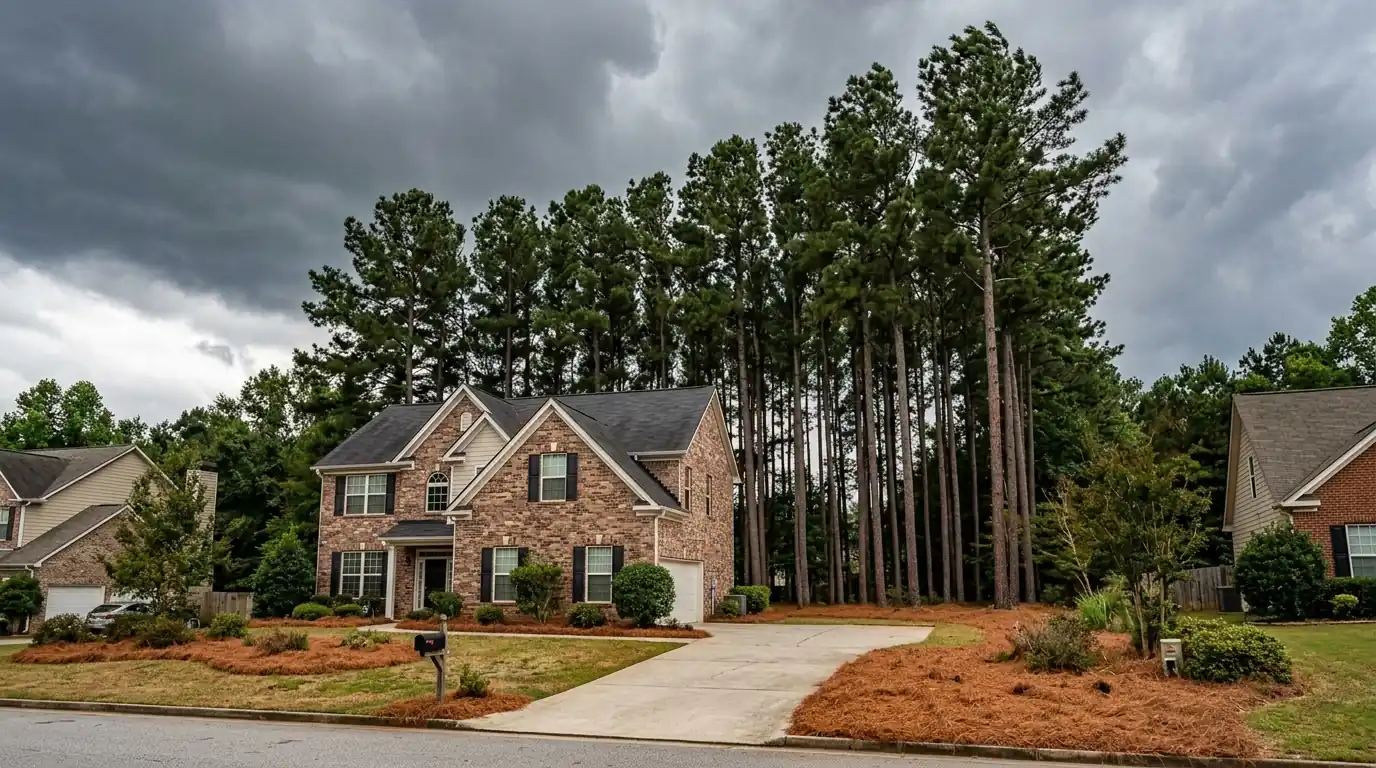
- A plan to drop a large tree whole in a yard where there's clearly no room for it to land.
How to compare quotes apples to apples
The easiest way to compare quotes is to put them in a simple table, one row per item and one column per company. For each quote, write down the method, the cleanup, what happens to the logs, whether the stump is included, who handles the permit, who files the Georgia 811 request, how the yard is protected and the rough timing. Blank boxes are the questions you still need to ask.
Once the boxes are full, adjust for the gaps. If one quote includes stump grinding and hauling and another doesn't, the second one isn't really lower until you add those back in. If one quote assumes a crane and another assumes a climber, ask each company why. Sometimes both methods work and the difference is simply equipment. Sometimes one of them is the only safe way to take the tree down over your roof.
It also helps to give every company the same information. Tell each one the same things: which trees, whether you want the stump ground, whether you'd like to keep the wood, and anything else you know about the yard, like a septic field, an irrigation system or a buried dog fence. Quotes built on the same request are far easier to line up.
Questions that make a quote clearer
When something on a quote is unclear, a direct question usually clears it up.
Ask what happens if the tree turns out to be hollow once cutting starts, and how a change like that would be priced. Ask whether the price covers one visit or several, and whether the crew will return for the stump on a different day. Ask how they plan to protect a particular feature you care about, whether that's a slate roof, a koi pond, a stone wall or a prized azalea bed. The answers tell you as much about the company as the price does.
When a higher quote is the safer choice
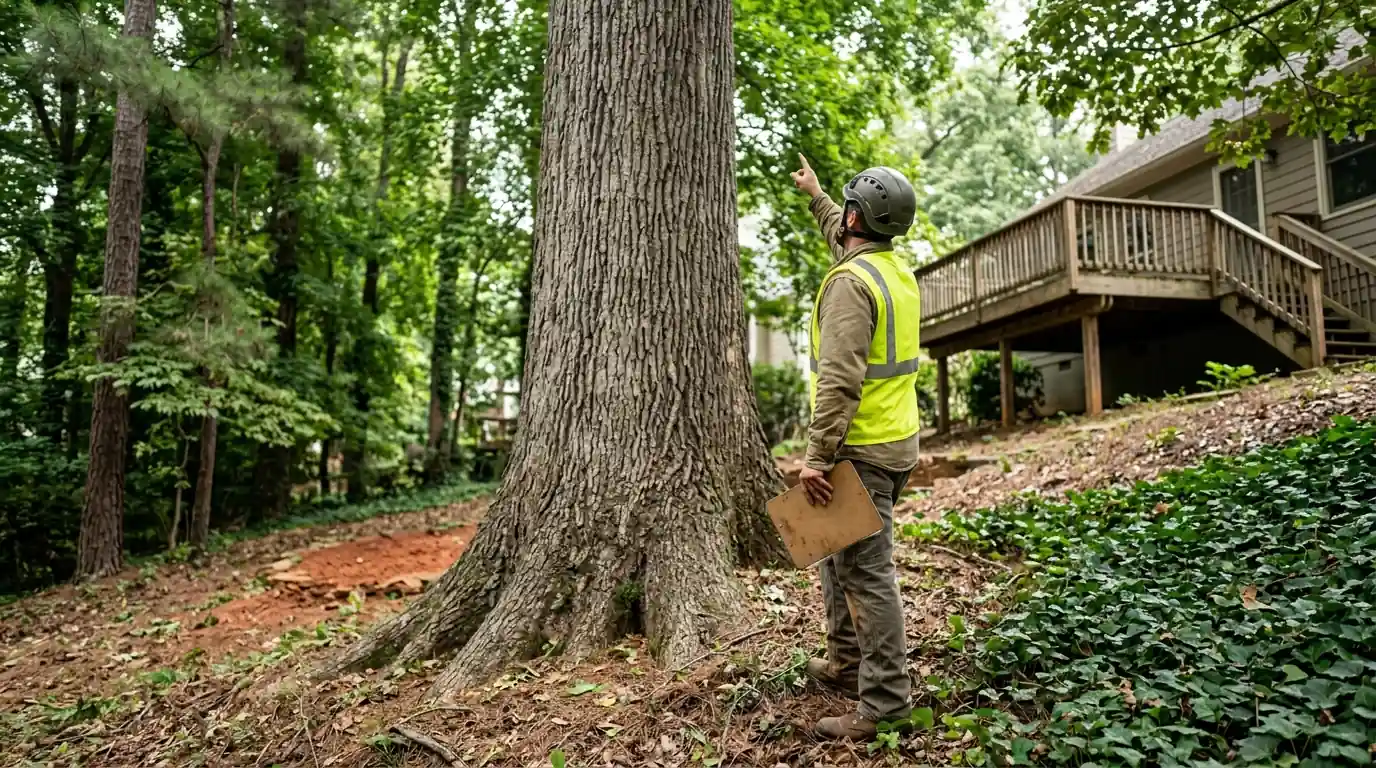
Sometimes the higher number simply reflects a safer plan. A large oak over the house in Sandy Springs that one crew wants to climb and lower in small pieces, while another wants to drop whole limbs and hope they miss the gutters, is not the same job at two prices. A dead tree that's too brittle to climb may need a crane or a bucket truck, and a quote that plans for that is pricing the real risk.
The same goes for permits and cleanup. A quote that includes the permit time and a full cleanup may look higher than one that leaves both to you. Count what your own time is worth, and what a stop-work notice from the city could cost, before deciding which is the better deal.
What our quotes include
We write every quote after seeing the tree, the yard and what's around it. It names the method, lists the cleanup, says what happens to the logs and the stump, notes the permit rule for the address and who files it, and states how we'll protect the lawn and driveway. If a crane is planned, the quote says where it will set up. Our tree removal page explains the methods in more depth, and crane jobs and permit handling each have their own page if you'd like the details first.
Key takeaways
- Read the scope before the total, because the number only means something once you know what it covers.
- A good quote names the method, cleanup, wood handling, stump, permit work, Georgia 811 request, yard protection and timing.
- No written scope, topping sold as trimming, pressure to decide on the spot, cash only and no permit mention are red flags.
- Put quotes side by side in a simple table and add missing items back in before comparing totals.
- A higher quote can reflect a safer method for a tree over a house, not just a higher price.